Yes, you can successfully add synthetic fiber or textile flakes to an existing sand arena, provided three core conditions are met: the underlying base and drainage remain structurally sound with zero stone intrusion; the existing sand contains minimal organic contamination (decomposed manure, woodchips, or clay mud); and the sand has a sieve profile centered in medium-to-fine silica grains. If these conditions are confirmed, adding fiber is far more cost-effective than replacing entire sand layers.
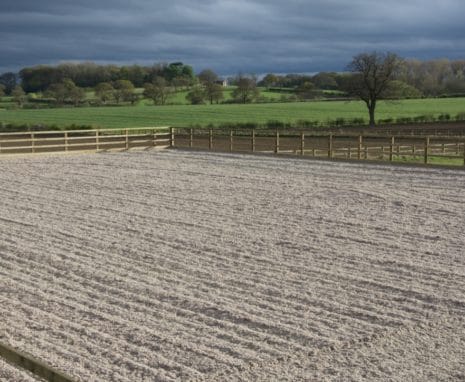
1. The Existing Arena Feasibility Checklist: Sand, Base & Cleanliness
Retrofitting an existing sand arena with synthetic fibers can be a cost-effective investment—avoiding the expense of hauling away existing sand and purchasing new quarry material. However, a successful retrofit requires careful evaluation of the existing footing layer.
University extension studies (Penn State, Kentucky, and Georgia) note that additives function by interlocking clean mineral grains. If existing sand has accumulated significant organic fines from unpicked manure, adding synthetic fiber will not perform as intended.
| Inspection Parameter | Acceptable Retrofit Candidate | Correction Required First |
|---|---|---|
| Base Condition & Drainage | Base is intact, level, and drains water freely without standing puddles; zero base stone intrusion. | Base stones are exposed; standing water ponds for days; clay boils up into sand during harrowing. |
| Sand Cleanliness & Organics | Clean sand with low organic content; manure has been picked regularly; zero decomposing wood bark. | Sand is heavily discolored from decomposed manure or rotting materials; emits musty odor when wet. |
| Sand Grain Mineralogy | Hard quartz silica sand or sub-angular manufactured sand with low fines passing the #200 sieve. | Soft limestone quarry dust or decomposed granite pulverized into powder that cakes into hard crusts. |
| Sand Depth Consistency | Consistent profile across the riding area within normal maintenance tolerances. | Severe humps and hollows across gates and corners; requires grading before adding materials. |
2. The Pre-Retrofit Sand Preparation Protocol
If your arena meets the suitability criteria above, execute these preparation steps before ordering bulk fiber:
3. Illustrative Retrofit Planning Scenario
The following scenario illustrates how a facility plans a fiber retrofit project:
Illustrative Project Planning Case (For Reference Only)
• Facility Scope: Existing indoor arena with washed concrete sand at an established depth.
• Identified Condition: Sand was dry and shifting under hoof on turns.
• Selected Material: Polyester Arena Fiber crimped staple.
• Planning Approach: Client calculated inclusion rate based on pilot bay testing, fluffed bales on a clean tarp, spread material in two perpendicular passes, cultivated above the base, and conditioned with water.
• Observed Result: Surface shear resistance improved, providing secure footing on turns without hoof rolling.
Recommended Materials & Technical Guides
Questions Answered in This Article
How are material costs estimated for an existing arena retrofit?
Material requirements are calculated from your arena square meters, sand depth, and the client-approved inclusion rate. Container shipping from manufacturing facilities provides logistics efficiency for commercial volumes.
Can fiber be added if sand already contains rubber mulch?
It is possible, but depends on rubber particle size and condition. Rubber creates vertical rebound while fiber creates tensile interlocking. A small trial bay is recommended before treating the full arena.
Will fiber blow away in an open outdoor arena?
No, provided regular moisture maintenance is maintained. Once incorporated into damp sand and compacted by hooves and dragging, fibers become physically entrapped within the sand matrix. Polyester also has a higher density than water, helping it remain in the sand bed.