Arena fiber clumping—where synthetic fibers ball up into nodules or form surface mats—is rarely caused by a defective fiber material. Rather, it is typically triggered by three mechanical and operational factors: harrowing powder-dry sand without prior irrigation; deploying grooming implements with improper tine angles that comb fibers upward; or un-opened compressed bale chunks being dropped directly onto sand during initial installation. Understanding the root cause allows quick, practical field correction.
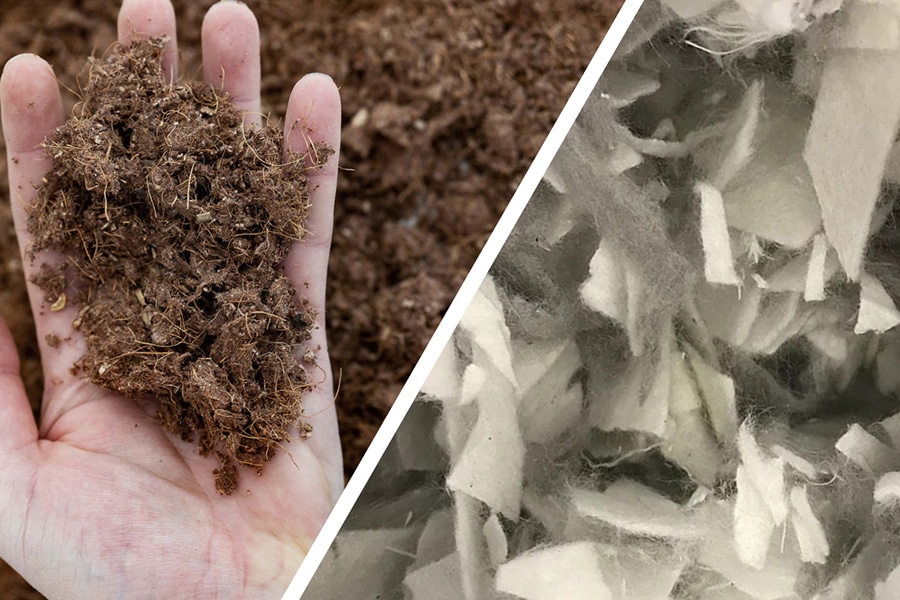
1. The Anatomy of a Clump: Identifying What You Are Seeing
Before attempting field remediation, pick up several clumps from your arena surface, place them on a clean board, and pull them apart by hand. Different clump characteristics indicate different operational causes:
| Clump Characteristics | Primary Mechanical Cause | Operational Solution |
|---|---|---|
| Dense felted nodules containing minimal sand grains | Bales were not fluffed prior to spreading; compressed chunks were cultivated directly into sand | Pick or hand-rake dense nodules; fluff thoroughly; re-incorporate into damp sand. |
| Damp balls of sand cemented together with fiber strands | Excessive clay or silt fines in sand coating fibers and forming a paste when wetted | Aerate surface with spring tines; avoid over-watering; evaluate sand cleanliness with a sieve test. |
| Fibrous surface mats or thatch floating on top of sand | Grooming dry sand or using improper tine angles that comb fibers upward out of the sand bed | Water to damp condition; adjust groomer tines so they cultivate downward; roll with a mesh roller. |
| Discolored clumps containing manure or bedding | Organic matter rolled up into fibers by repeated tractor dragging | Remove organic clumps; enforce daily manual manure removal before dragging. |
2. The Critical Role of Moisture: Why Dry Sand Promotes Clumping
According to the FEI Equine Surfaces White Paper, moisture is a primary operational variable governing sand-and-fiber surface stability. Water creates capillary menisci between silica grains, anchoring the fibers within the sand bed.
When an arena dries out into powder, the sand loses cohesive friction. As tines pass through dry sand, the vibration causes synthetic fibers to separate from sand grains and rise to the surface. Repeated passes can roll these loose surface fibers into felted clumps.
Best Practice: Avoid dragging an arena with synthetic fibers while the footing is powder dry. Ensure the sand is conditioned with moisture prior to harrowing.
3. Arena Groomer Tine Calibration & Operating Routine
Equipment choice and operating routine have a direct impact on fiber distribution:
Recommended Materials & Technical Guides
Questions Answered in This Article
Can clumps be resolved without replacing the footing?
Yes, in most cases. By thoroughly watering the arena, hand-fluffing any large surface nodules, and cultivating slowly in cross-diagonal passes, the fibers can be re-dispersed into the sand.
Why do fibers clump around gates and corners?
High traffic concentration and tight turning radiuses cause localized shear stress, displacing sand and exposing fibers. Ensure gates and corners receive regular maintenance and adequate water coverage.
How does polyester fiber density affect clumping?
Polyester is naturally denser than water and stays integrated within the damp sand matrix rather than floating to the surface after heavy rainfall, which helps prevent surface clumping.