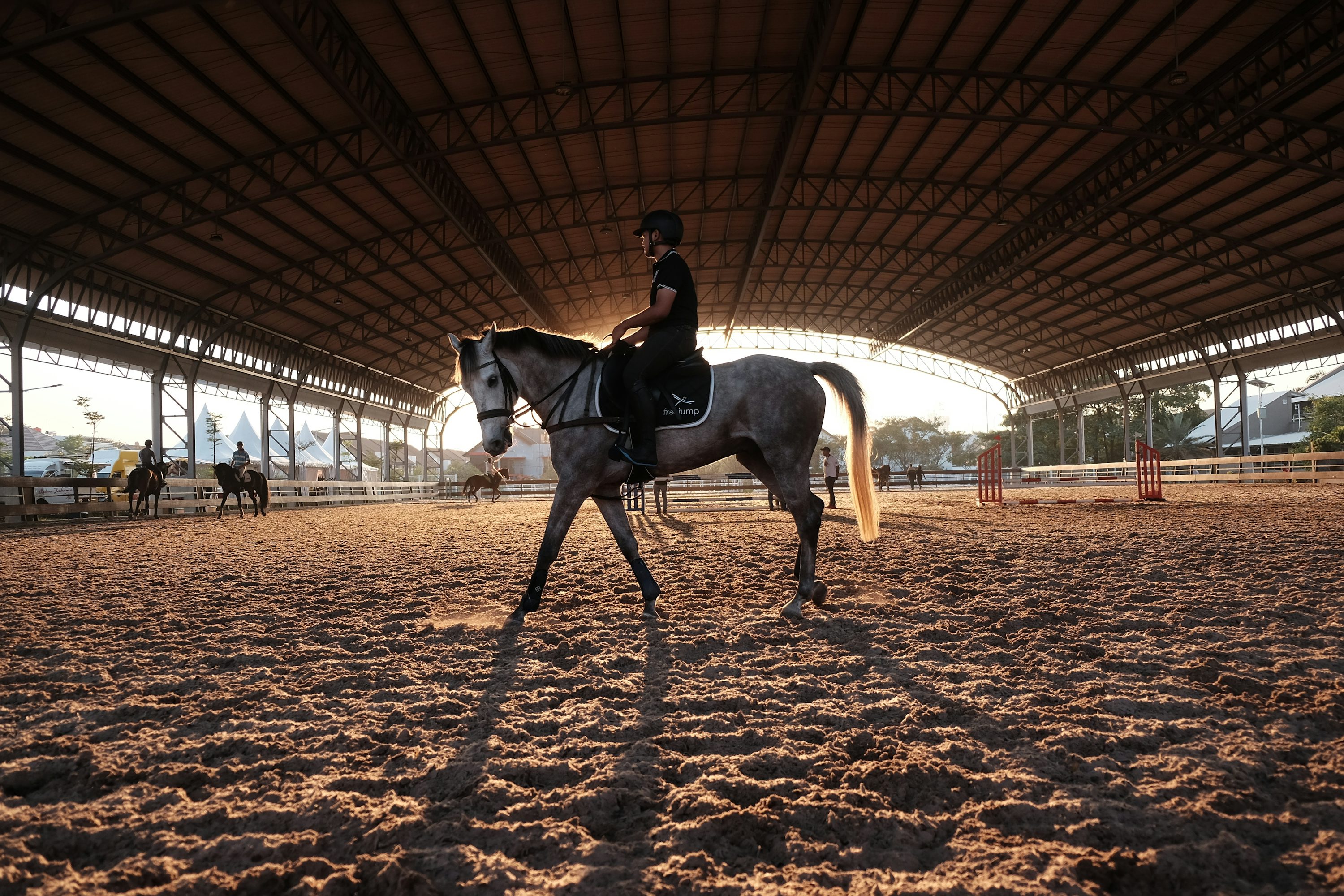
What this application requires
Guidance for enclosed equestrian facilities where surface moisture, dust management, ventilation and grooming are interdependent operational concerns. The right approach starts with the actual footing system, rather than assuming a specific additive is suitable for every site. Arena traffic, surface construction, sand selection and the operating environment all influence the material conversation.
For this application, the project team should document the arena's actual use pattern, surface condition and desired operating process. That information helps distinguish a general material request from an informed B2B sourcing brief.
Primary footing considerations
Material selection context
Textile components may be selected because they can influence moisture behavior within the footing layer. No additive removes the need for appropriate watering and ventilation management.
Before confirming a material, a buyer should share the intended arena use, whether the surface is indoor or outdoor, the current or proposed sand information, approximate surface area, expected supply requirements and local climate. This allows the supplier to discuss available materials, custom options and packaging without inventing technical values.
Maintenance and management
Indoor arenas benefit from written water-and-grooming schedules that account for season, building ventilation and daily riding traffic.
Care protocols should be led by the arena's responsible construction and operations teams. Fiber and textile additives are not a replacement for depth control, suitable watering, properly selected grooming practices or a functioning base and drainage system.